| James McNitt's text |
Bill McNitt's annotations |
|
Once into High School, I started to develop along certain lines. History and
Civics posed no problem, and French and English usually brought high marks.
Only Algebra, and later Trigonometry, kept me off the honor roll as a rule.
Manual Training was not my forte. After a month in Metal working, I was
transferred to Print Shop, where I could get by. I even had a semester of
Auto Mechanics. Gym, Music and Art brought out no signs of development along
those lines. In my junior year I added Spanish to my continuing French
studies. Public Speaking in my senior year brought a D when I made the
mistake on our written exam in saying that the course hadn't helped me very
much.
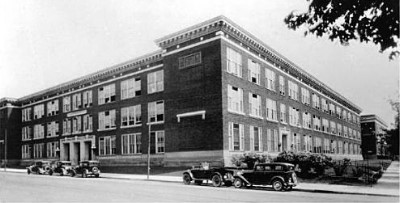
South High School in 1931
|
South High had a diverse group of students; working class
folks and minorities sent their children to South, as well as a few pockets
of well-to-do families.
As mentioned earlier, South High School was located at the southwest
corner of Hall Street and Jefferson Avenue SE. The Gerald R. Ford Job Corps
Center of the U.S. Department of Labor currently occupies the building.
|
|
South High, as its name indicates, served the south end of Grand Rapids.
It was a red brick building built in 1913. In the same building was South
Junior High, comprised of the 7th and 8th grades.
The 234 members of the Senior Class were assigned to Session Room 217,
under the supervision of P. L. (Pop) Churm. There were not that many desks
or seats, so they had to be shared. The names indicate a mainly Anglo-Saxon
background, with a good representation of Dutch, several Polish or Russian
Jews, and a smattering of Syrian, Italian and others.

|
The text at left was not originally part of this autobiography. It
is from a story Dad wrote in 1974 about one of his high
school classmates - U.S. President Gerald R. Ford. |
|
There was in school a small group of Young Pioneers, a Communist oriented
bunch. I had access to their newspaper, but it was badly written and full of
the usual clichés about capitalist imperialism. They were treated with
scorn and derision and were once hauled from class to scrub out signs
painted on the sidewalks outside of school regarding a May Day rally.
|
|
|
1 was part of a group which organized the 4-C Hi-Y, affiliated with the
YMCA. There was already an existing Hi-Y club, but for some forgotten reason
it did not meet our needs. This entitled us to YMCA privileges such as
swimming. I was president for a year of La Coterie Francaise, a French club
at which all meetings were conducted in that language.
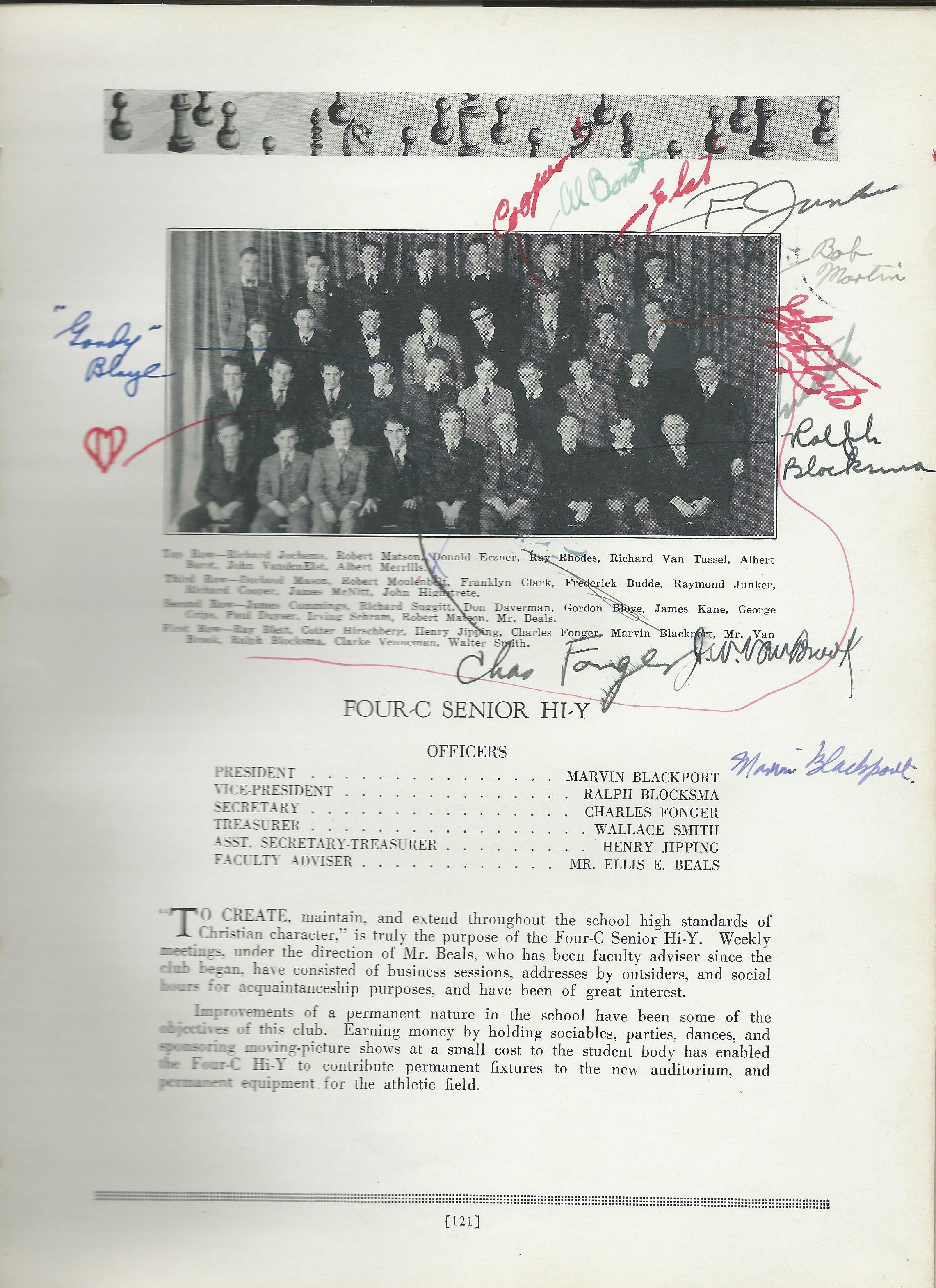

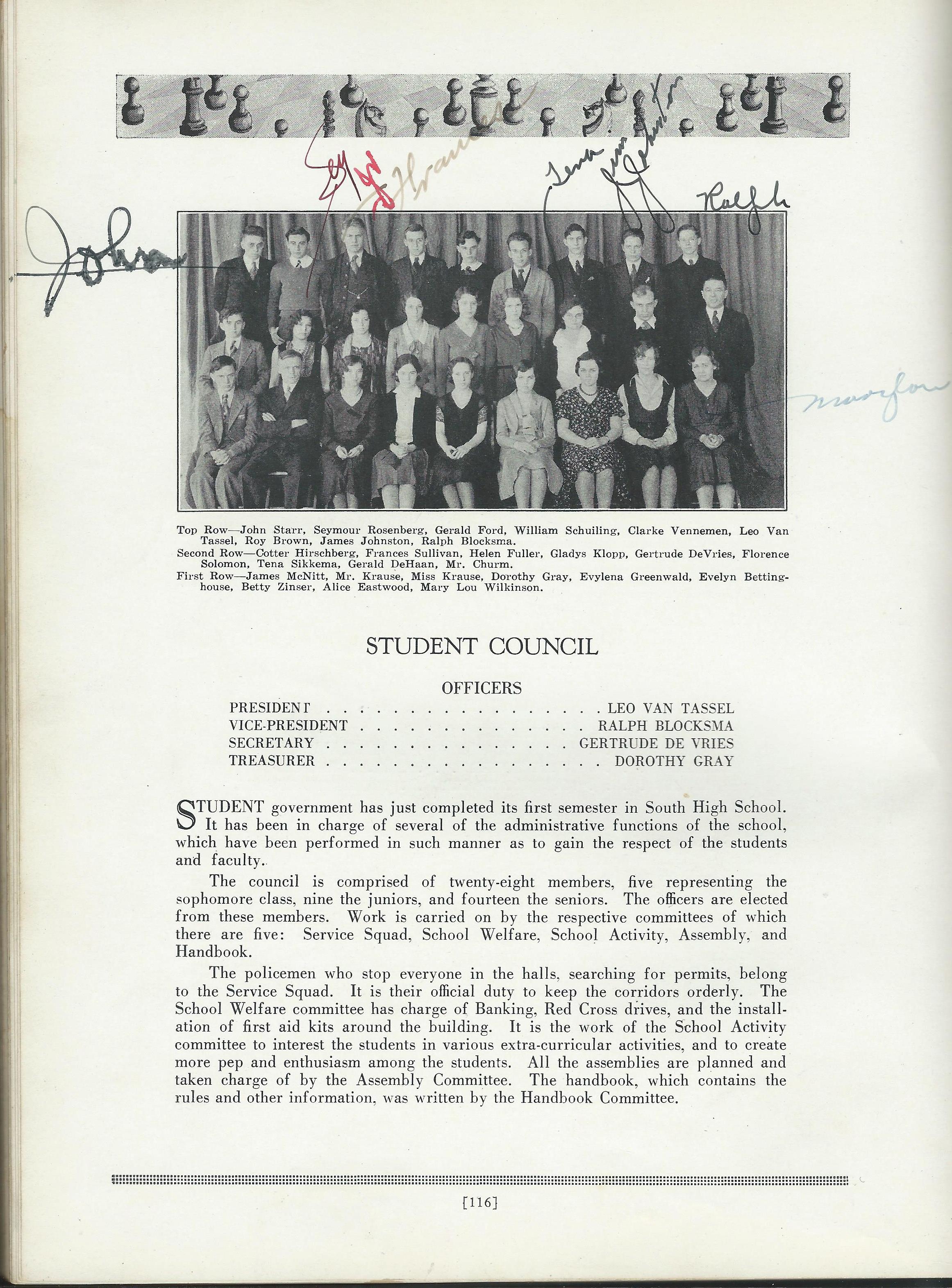
- Four-C Senior Hi-Y yearbook page
- La Coterie Francaise yearbook page
- Student Council yearbook page (includes both Dad and Gerald Ford)
|
|
|
Dad and Glenn had been looking around for a place to open a store.
They finally decided on the small town of Conklin, some twenty miles
west of Grand Rapids. Here in 1928 they opened a sizeable place with
groceries, meat, and dry goods.
|
Conklin is an unincorporated village in the northeastern part of Ottawa County and
21 miles northwest of Grand
Rapids. It was a station on the part of the Grand Rapids and
Indiana Railroad that ran between Grand Rapids and Muskegon.
My grandfather spent his early years in northeastern Ottawa County
and had some second cousins living around Conklin.
The village never grew very
large. Today the downtown district of Conklin consists of a grain
elevator, a post office, a video/general store, a John Deere dealership,
and Fenian's Irish Pub. |
|
It was decided that I would stay with my aunts to finish out the school
year. Technically their house at 107 Logan St. was in the Central High
School district, but nobody ever objected. This completed the tenth grade
for me. I normally would have had to go to the Conklin school, but this ran
only through the tenth grade. The township board agreed to pay my tuition to
South High instead of to Coopersville High, where most students went for
their last two years. This meant that I was to stay with my aunts for the
rest of my high school days. In the summertime I would come to Conklin and
help out in the store.
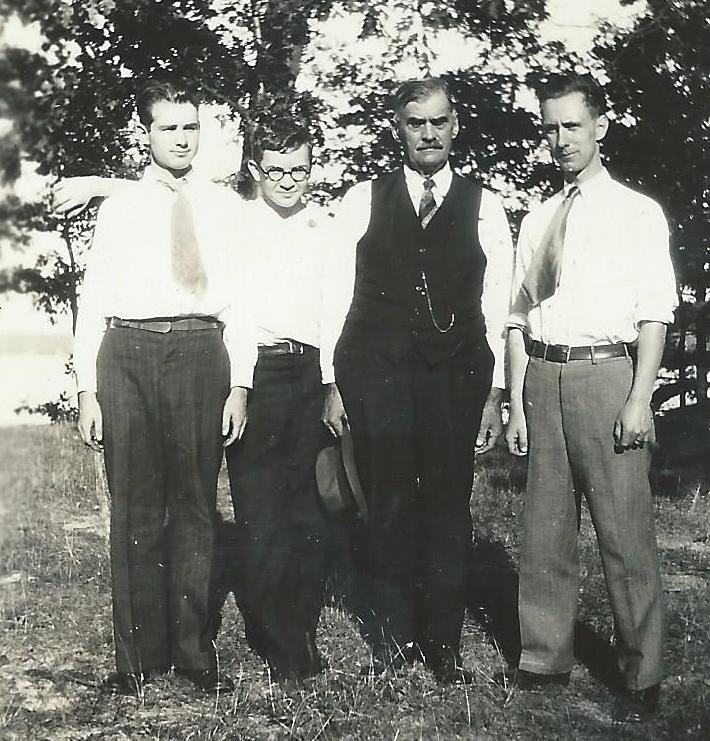
Glenn, Jim, and Walt McNitt with their
grandfather, Roando Merrill, ca. 1928
|
|
|
It
was about two miles from the Aunts' house to South High. Some mornings Aunt Leena could drop me off on her way to work,
depending on her shift. More
often I would walk both ways. One
cold afternoon I froze my ears before I reached the house.
|
|
|
Sometimes I carried my lunch, but more often I would eat at one of the
nearby restaurants, usually Bill's just across the street. Although I do
not recall it, it is said that future President Jerry Ford worked there.

Bill's Place ca. 1930
|
Click here
for information about President Ford's work at Bill's Place |
|
Speaking of Jerry Ford, I have chronicled elsewhere that while I was
acquainted with him, we didn't travel in the same circles. He was well
thought of as the captain of the football team and an Honor Society member,
but nobody in his wildest dreams would have predicted that one day Jerry
would be President.
|
|
|
As captain of the 1930 South High team, he [Gerald Ford] led a great
squad to an undefeated season. The season culminated in a Thanksgiving Day
game with traditional rival Union, from Grand Rapids' west side. Heavily
Polish ethnically, they had a big, strong team which was also undefeated.
South Field, in use this season for the first time, was packed to its
12,000 capacity. The stage was set for the BIG GAME, a battle for the
mythical state championship.
The game was anticlimactic. Snow fell steadily, accompanied by bitter
cold. In the stands the seniors and others in the student section had been
issued squares of colored cloth intended for making mass displays. They
offered only a little protection as head coverings against the mounds of
snow as it collected on our heads and shoulders as we huddled together. On
the field conditions could only be described as miserable. No effective
offense could be launched, and neither team penetrated beyond the other
team's 10-yard line. It ended almost inevitably in a 0-0 tie. Union was
later to forfeit the game due to their having used an ineligible player.
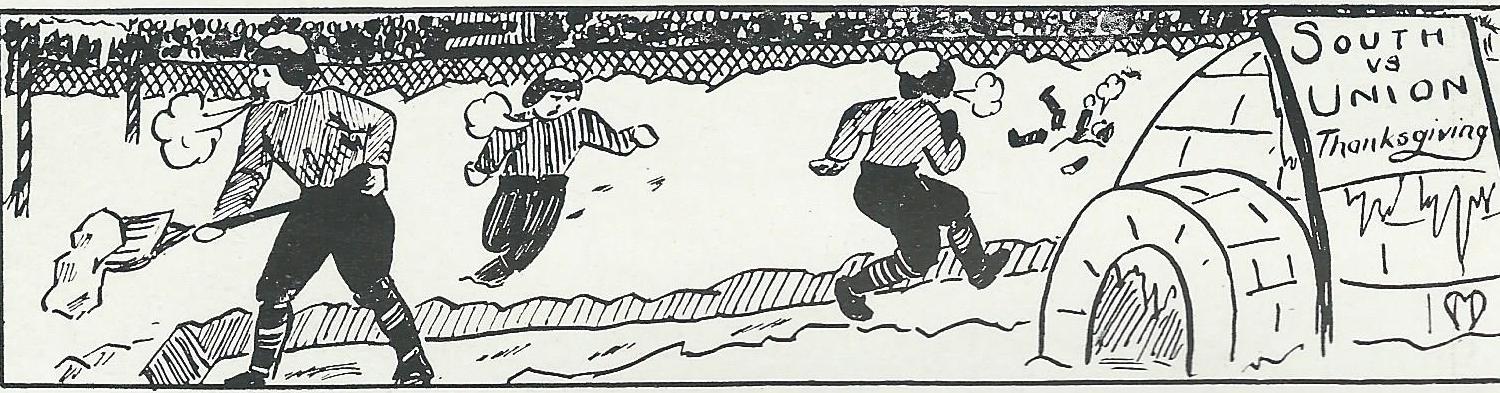
Cartoon from the yearbook |
The text at the left was not originally part of the
autobiography. I have excerpted it from the Dad's 1974 story about Gerald R.
Ford as it tells how Dad (and many of
his classmates) spent Thanksgiving Day of their senior year:
More on this game appears here.
|
|
He [Gerald Ford] and I were in a Public Speaking class together. I chose as my
subject for one speech the hypocrisy of "amateur" tennis, with
its under-the-table payments to outstanding netters. Ford, possibly
interpreting it. as an attack on sports in general, took issue with my
stand. I hastened to assure him that I had no wish to demean the
sport as such, but that I felt the payments should be out in the open.
|
This is another excerpt from Dad's 1974 story Dad about Gerald R.
Ford. |
| My best friend in high school was Paul Vonk.
His father, Gerrit, born in the Netherlands, ran a paint store on the west
side. There was an older brother, Cornelius, then away at college, as well
as Martha and John, both younger. I was often at their house on weekends,
sometimes going to church with them. Paul ran on the cross-country team
and occasionally placed on the track team in the 440-yard run.
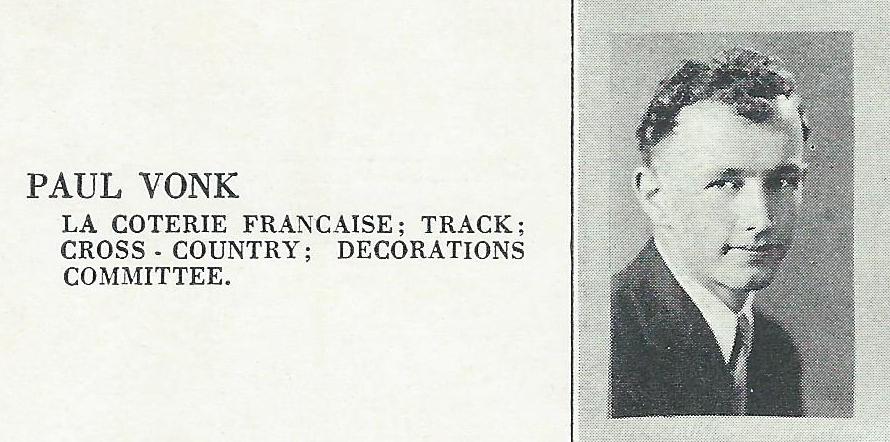
Paul Vonk
|
Paul Vonk went on to a career in academia
culminating in his service as President of Oglethorpe University in
Atlanta, Georgia, from 1967 to 1975. |
| In my Junior year at school one of our
assignments in English class was to write a lengthy story. My
novel."The Children's Rebellion", which involved a march on
Washington, was well received. The following year I was invited to join
the staff of The Pioneer, a monthly literary magazine. I wrote several
stories which were published.
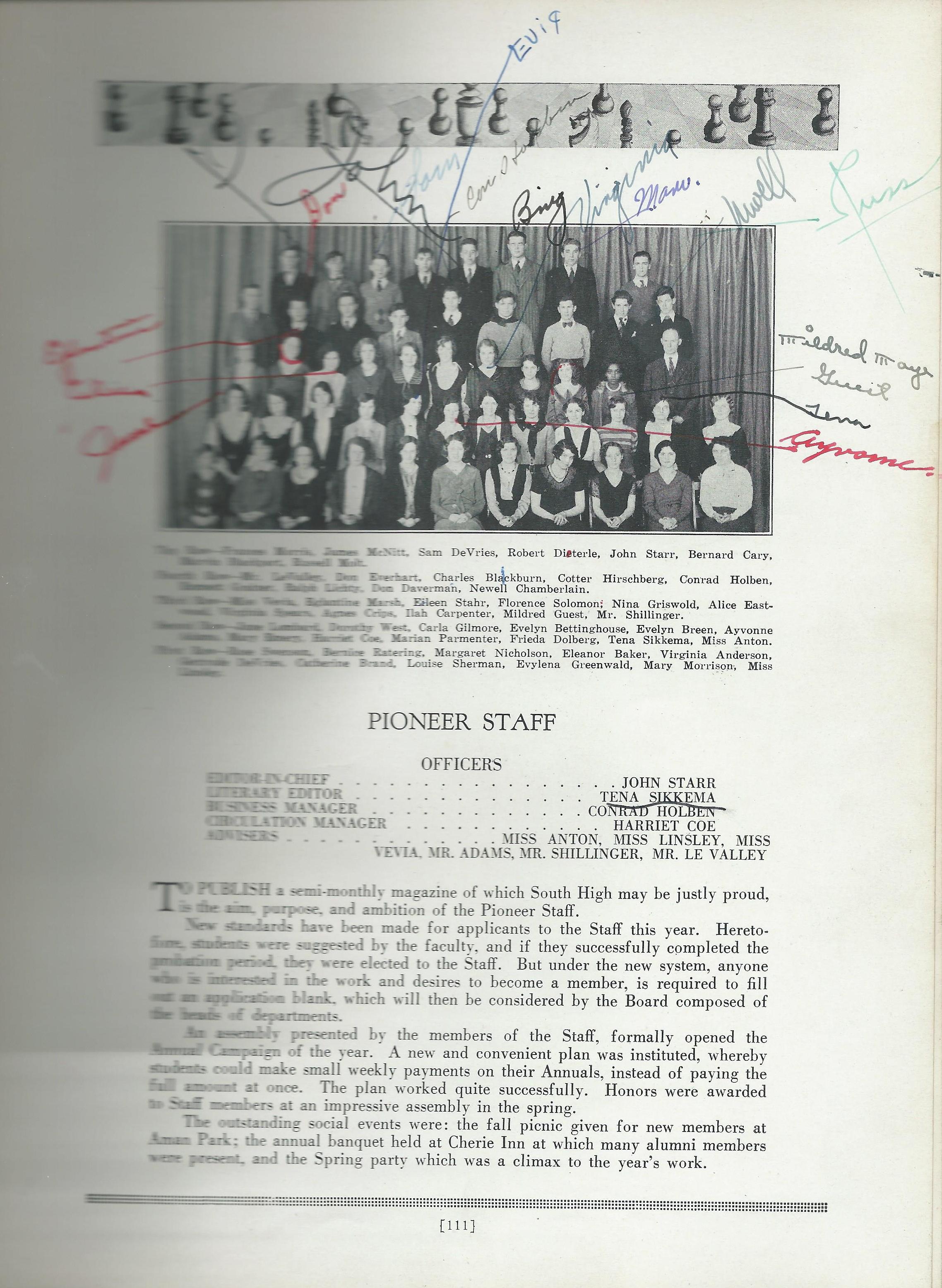
Pioneer yearbook page
|
No copies of "The Children's
Rebellion" have survived. Here are links to PDF files of some
of Dad's writings that appeared in The Pioneer:
- October 11, 1929 - Short story "Mountaineer Justice"
- March 20, 1930 - Short story "Skyscraper: The story of how a name affected
Frank's nerves"
- April 10, 1930 - short story "Philanthropist: A boy and his
dog cure Rose and Mr. Allstyne's conscience is soothed"
- May 8, 1930 - Short story "Accident: Bill wins his Betty and a collegian's
revenge is spoiled"
- May 22, 1930 - short story "Big Bill: a story of free
language and hard punches"
- September 25, 1930 - short story "Mysterious Lady: Was she
flesh-and-blood, or fantasy?"
- October 16, 1930 - short story "High Pressure Combines
Brains and Salesmanship"
- November 13, 1930 - short story "The Mudder: It ran in the
Langford family"
- Feb. 19, 1931 - a tongue-in-cheek editorial about "Reforms"
|
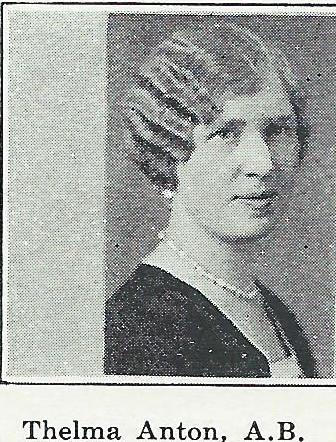
| Early in my Senior year our faculty adviser,
Miss Thelma Anton, stopped me in the hall. She said Leo VanTassel, who had
been slated to be Editor-in-chief of the magazine and yearbook, had
decided to run for class president, which automatically eliminated him.
from the editorial job. She asked me to take the job. Although I realized
I was totally unprepared, I accepted.
|
Dad's 1974 story about Gerald R. Ford adds a few details:
Joining the Pioneer staff the previous year as a writer, I had gained
minor fame due to a flair for words and a lively imagination. A shy,
introverted youth, I mentally questioned my ability to fill the difficult
and demanding job, but I stammered an acceptance.
Miss Anton was a 1922 graduate of South High School, so she was only
about nine years older than students in the class of 1931. After finishing
college she worked elsewhere both as a teacher and a librarian before returning to
South High as an English teacher in 1930. |
| The job took up much of my time in my senior
year, first on the Pioneer, then on the Pioneer yearbook. As a result of
the position, I was sent to Cleveland, along with Bernard Cary, the
business manager, Patricia Coe, the circulation manager and Miss Anton, on
a school publications seminar. We were treated to a program of readings
and songs by Carl Sandburg.
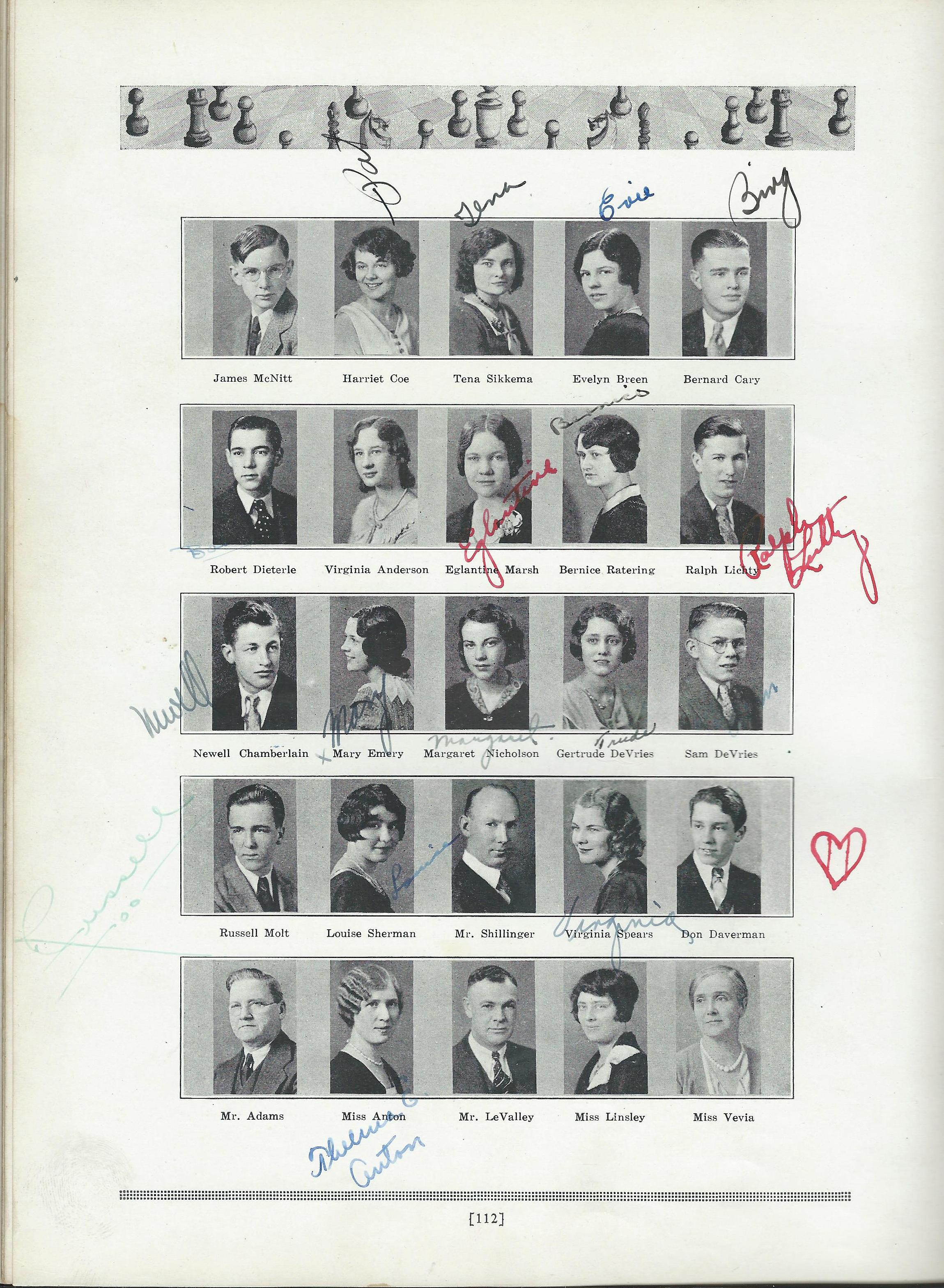
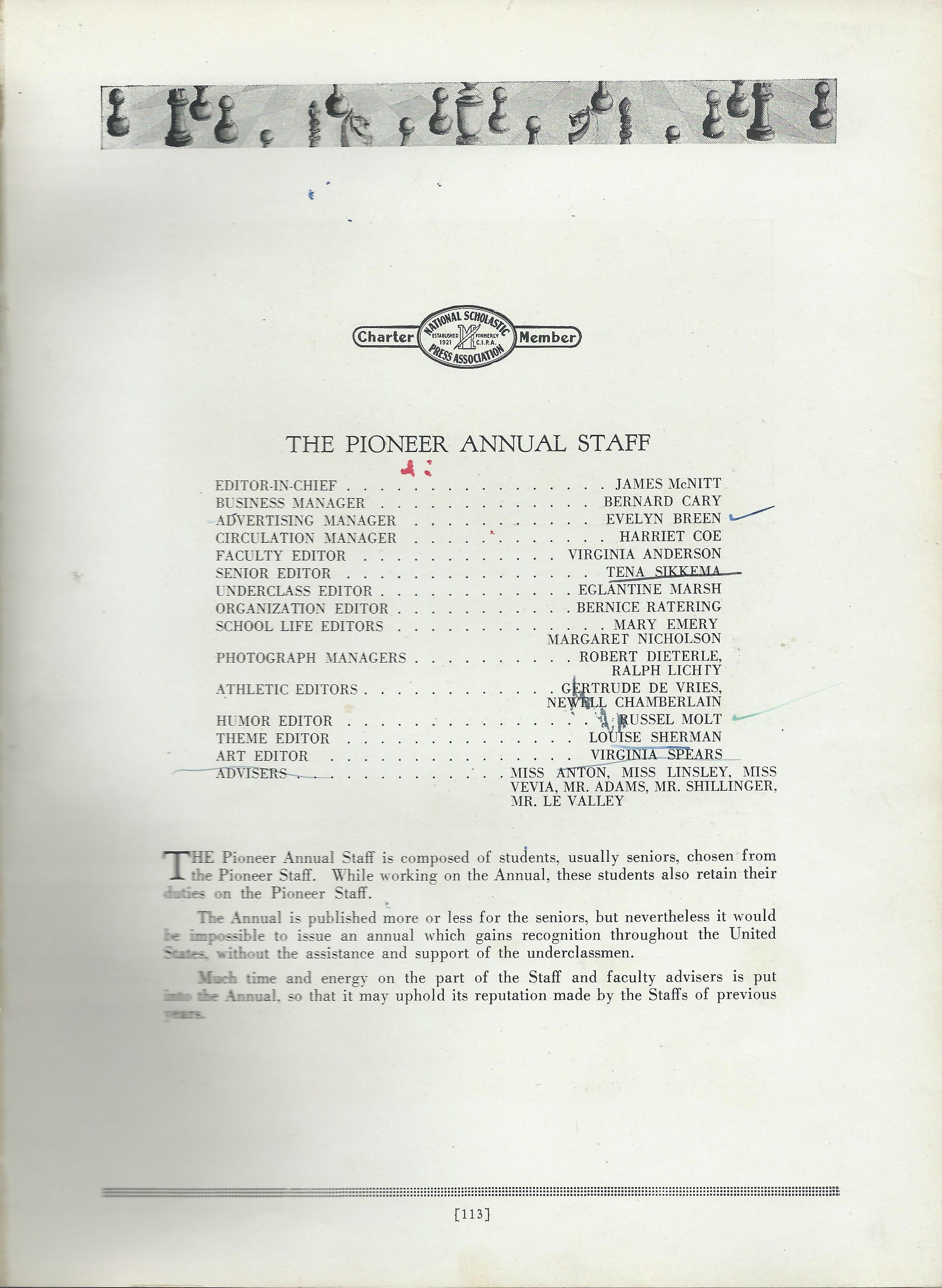
Yearbook staff photographs and staff page
|
The first issue of The Pioneer after Dad
took over contains a welcome to the new editor and notes that "The
sudden withdrawal of Leo VanTassel from the staff to enter Senior
politics, made it necessary for James McNitt to assume the rather complex
duties of editor-in-chief without any opportunity for special training and
practice."
Pioneer staff members who filled minor positions received one credit
per semester for their work. Dad and others who filled major posts
received two credits. In addition, 1 to 6 extracurricular points
were assigend to various poisitions on the staff. |
| Shortly after our return, I underwent a
mandatory test on English grammar, which I failed, probably due to its
coming so soon after the seminar. As a result I had to take a class in
grammar during my final semester. In a way it was a good thing. I was not
actually weak in the subject, so was able to sail through the class with a
minimum of effort. |
|
| The magazine turned out all right, but there
was some criticism of the yearbook. It was the bottom of the Depression;
money was very scarce, so the book had to be cheapened in several ways,
principally on the cover. I had to choose a theme, and came up with the
idea of a deck of cards. It was pointed out that some deeply religious
parents might object, so a compromise was made on the game of chess. When
Jerry Ford became President many years later, the books became quite
valuable, one auctioning for $475.00. |
One dealer currently
lists a copy of this yearbook with a price of $5,000. |
| In June, 1931, the class graduated, the first
to do so from a newly constructed auditorium. My grades put me in the
upper sixth of our class. I don't recall too much about the graduation. At
the Class Day exercises I was dressed, as were the other boys, in a blue
jacket, white flannel trousers and black and white shoes. It was a
stiflingly hot night, and whenever we rose, the wooden folding chairs
tended to stick to the trousers and come up with us.

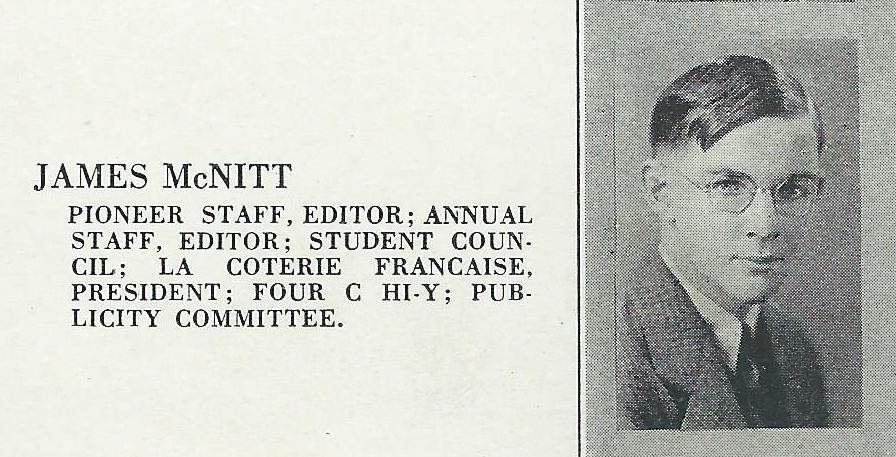
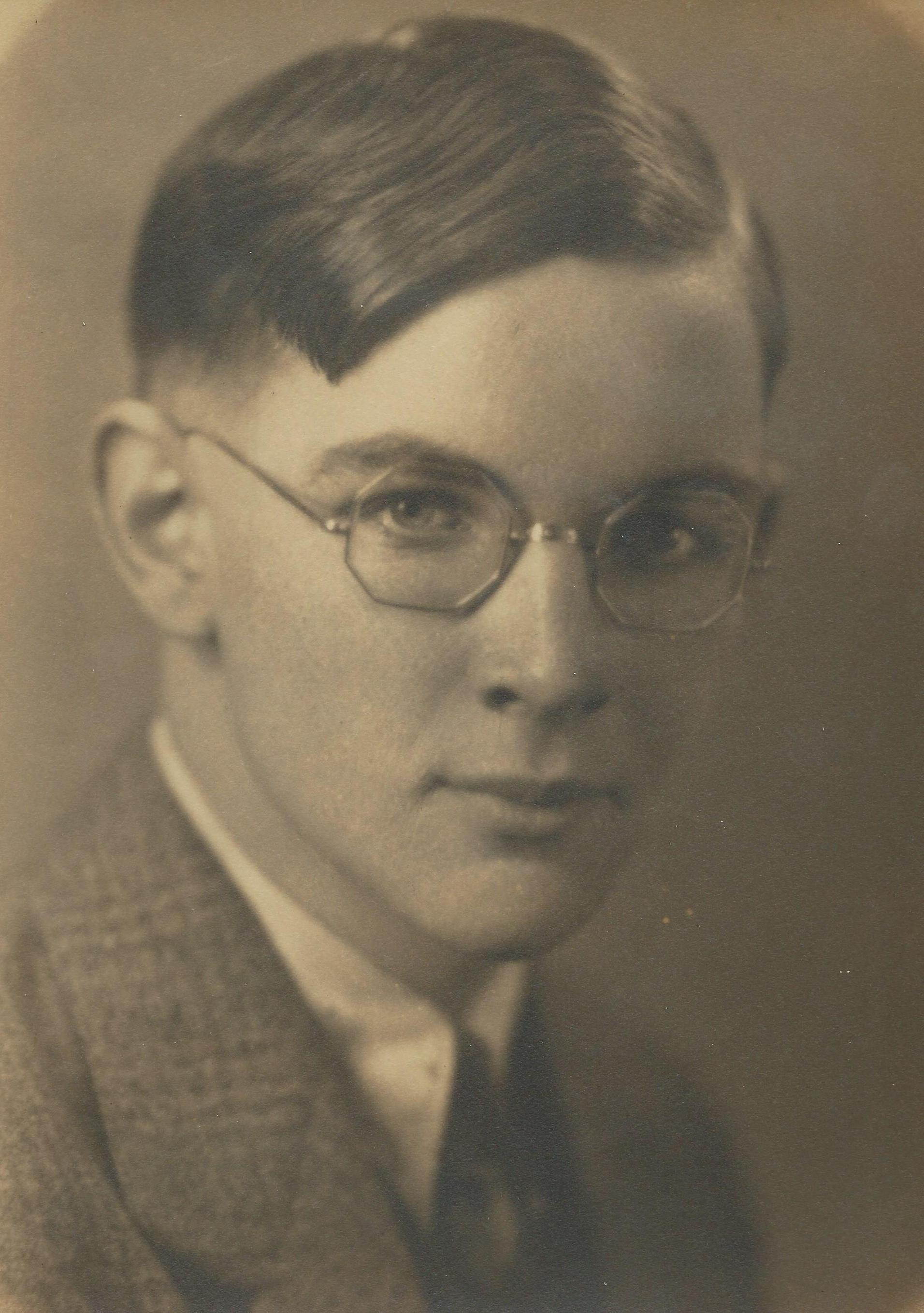
-
South High School commencement program, 1931 (PDF file)
-
Yearbook entry for Dad, 1931
-
Senior photograph of Dad, 1931
|
|